10 gamification examples for ecommerce (and how to use them in your webshop)
Daily puzzles, streaks, points and progress bars. 10 gamification examples from Wordle, Duolingo, Starbucks and more, and how to use each one in your webshop.
Gamification sounds like something for big brands with big budgets. But the ideas behind the best examples are simple: a reason to come back tomorrow, a goal that's almost reached, a small win that feels earned. In this post, we look at 10 gamification examples from well-known brands, why each one works, and how to use the same idea in your own webshop, often in an afternoon.
New to the idea? Start with 6 benefits of gamification for webshops, then come back for the examples.
1. The daily puzzle (Wordle)
What it is: Wordle gave everyone the same puzzle once a day. You couldn't play more than once, and the next one arrived at midnight. Millions of people built it into their morning, and shared their coloured grids without giving away the answer.
Why it works: one puzzle a day creates a habit and a small dose of anticipation. Because everyone plays the same puzzle, it's something to talk about.
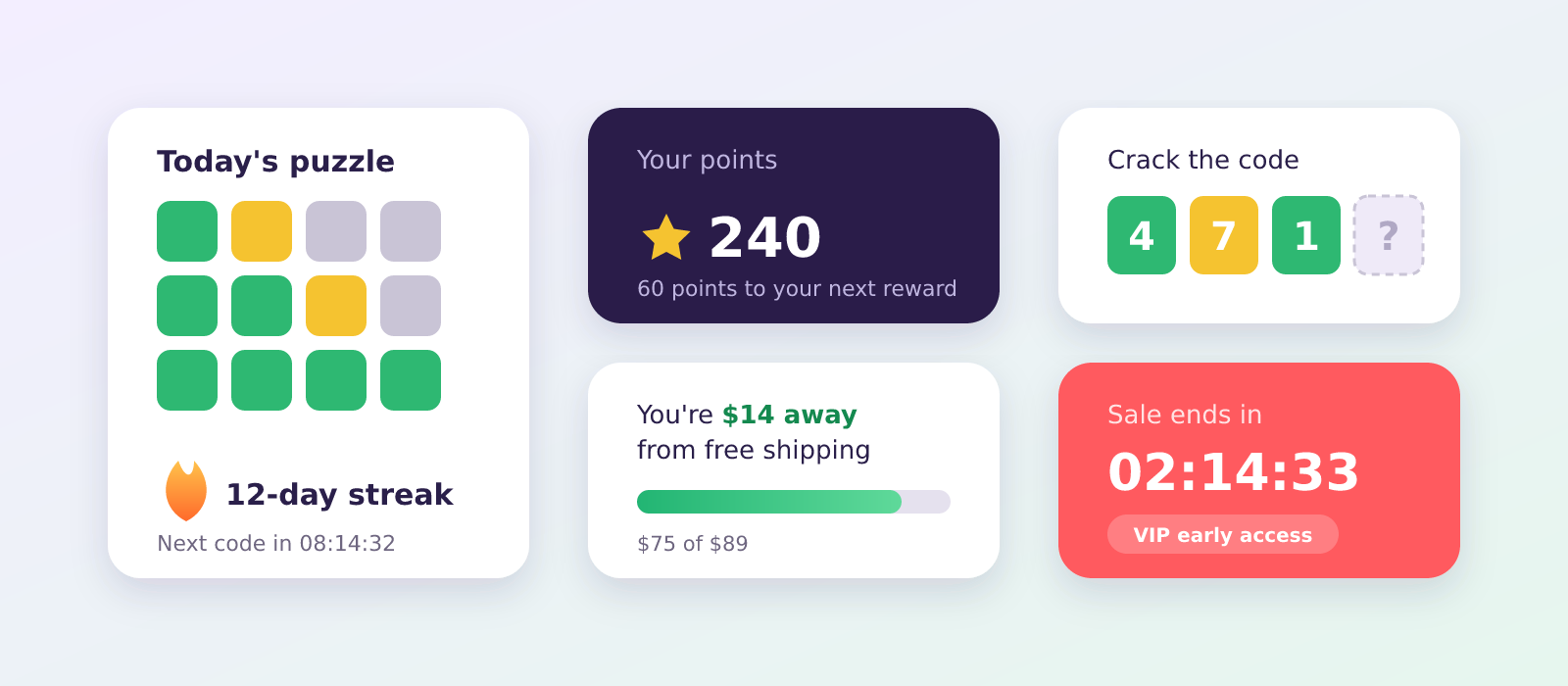
For your webshop: put a daily puzzle on your site and give winners a reward. MojiTiles does exactly this: a new colour code every day, six tries, and a countdown to the next code, so visitors have a reason to come back tomorrow. We wrote more about the idea in A daily Wordle-style puzzle for your website.
2. Streaks (Duolingo)
What it is: Duolingo counts how many days in a row you've practised. After a few weeks, people keep going partly to protect the number.
Why it works: a streak turns a small daily action into something you'd lose by skipping a day. The longer it gets, the more it's worth to you.
For your webshop: streaks work best for things people can do often and quickly. A daily game is the natural fit: MojiTiles shows every player their current and best streak, alongside their win percentage and games played. For purchases, a gentler version works, like a reward for ordering three months in a row from a subscription shop.
3. Points you collect (Starbucks Rewards)
What it is: Starbucks Rewards gives members stars for purchases, which they swap for free drinks and food. The app shows how many stars you have and what you can get with them.
Why it works: points make progress visible. Every purchase moves you closer to something, so the next one feels more worthwhile.
For your webshop: most shop platforms have loyalty apps that add points. The key is to make the first reward reachable quickly, ideally after one or two orders. A reward that takes a year to reach doesn't change anyone's behaviour.
4. Tiers and status (Sephora Beauty Insider)
What it is: Sephora's Beauty Insider programme has levels that unlock as members spend more during the year, with better perks at each level.
Why it works: status is a reward in itself. Customers close to the next level have a reason to buy from you rather than from a competitor.
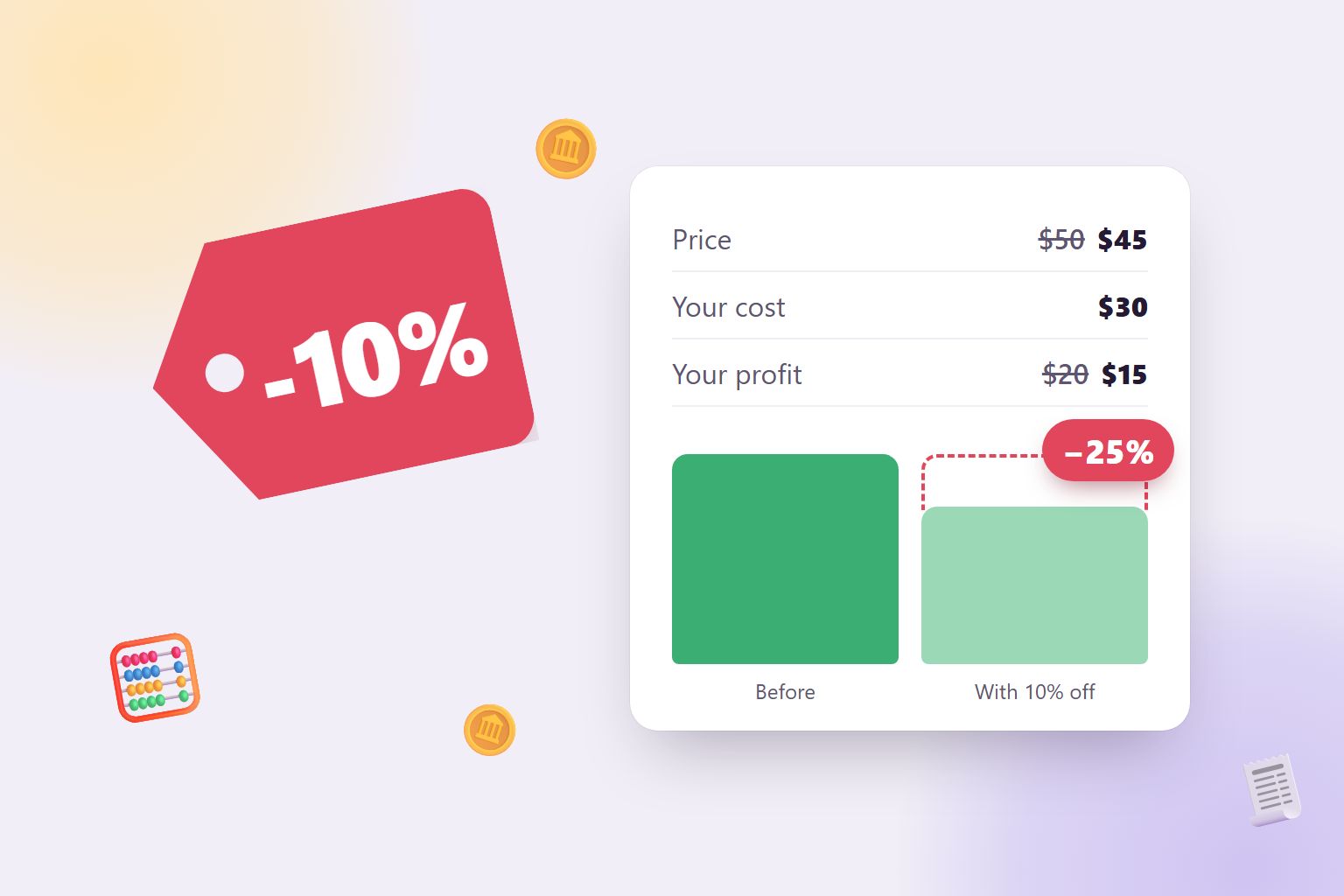
For your webshop: two or three levels are enough. Give the top level perks that cost you little but feel special: early access to sales, free shipping on every order, a gift with the first order of the year. Perks beat discounts, because they don't train customers to wait for a lower price. See what a discount really costs for the numbers.
5. Progress bars (LinkedIn)
What it is: LinkedIn shows how complete your profile is and what's missing. An unfinished bar quietly asks to be finished.
Why it works: people like to complete things they've started, especially when the finish line is close and clearly marked.
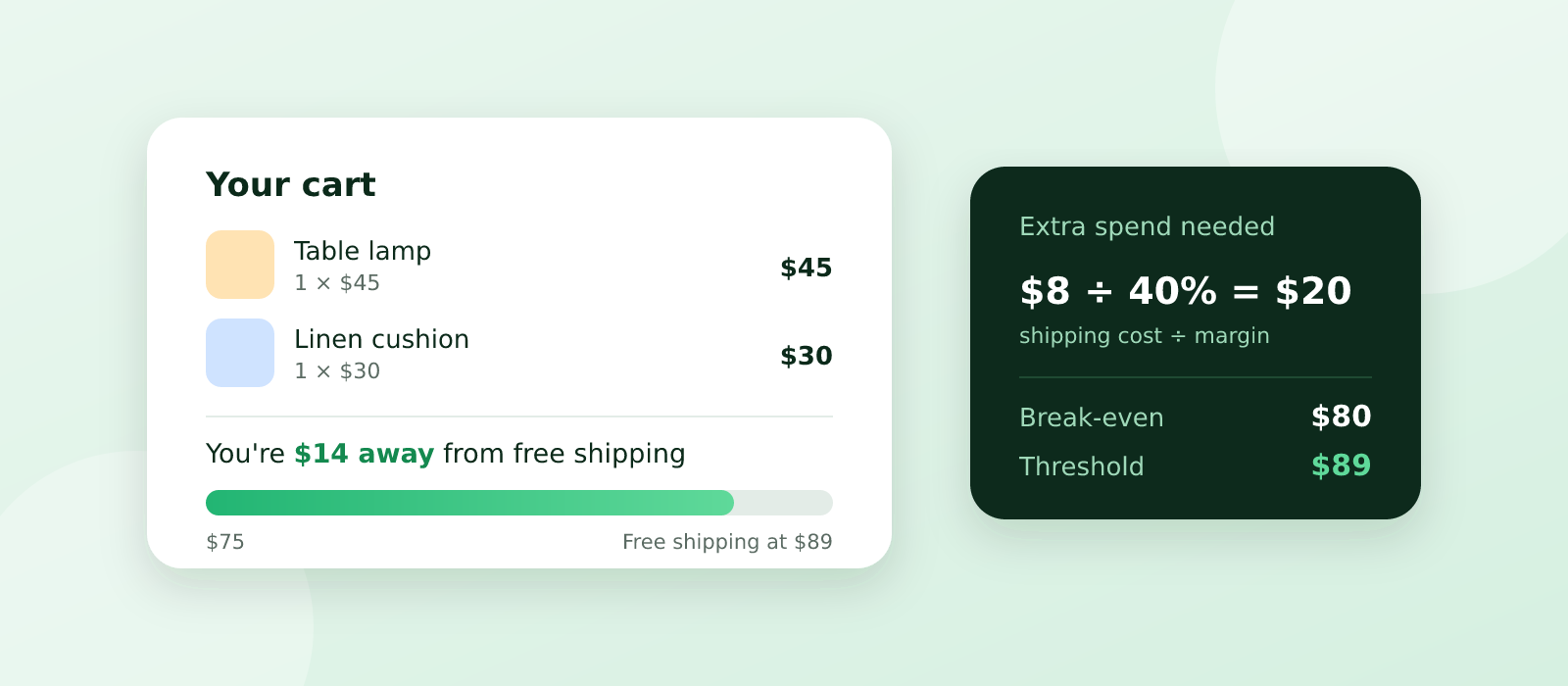
For your webshop: the classic example is free shipping. "You're $14 away from free shipping" in the cart turns a shipping fee into a goal, and the extra item pays for the parcel if the threshold is set right. Our guide on how to set a free shipping threshold shows how to find the number.
6. Collect the set (McDonald's Monopoly)
What it is: McDonald's Monopoly gives customers game pieces with their order. Collect the right set, and you win a prize.
Why it works: collecting is fun in itself, and every missing piece is a reason to come back.
For your webshop: you don't need a lottery. A stamp card works: "Buy from all four seasonal collections this year and get a gift." So does a set of free samples, one per order, that together make a complete kit. Keep the set small, three to five pieces, so it feels possible.
7. Countdowns and limited deals (Amazon Lightning Deals)
What it is: Amazon's Lightning Deals run for a short time and show both a timer and how much of the deal has already been claimed.
Why it works: a clear deadline makes people decide now instead of later. Real scarcity is one of the strongest reasons to act.
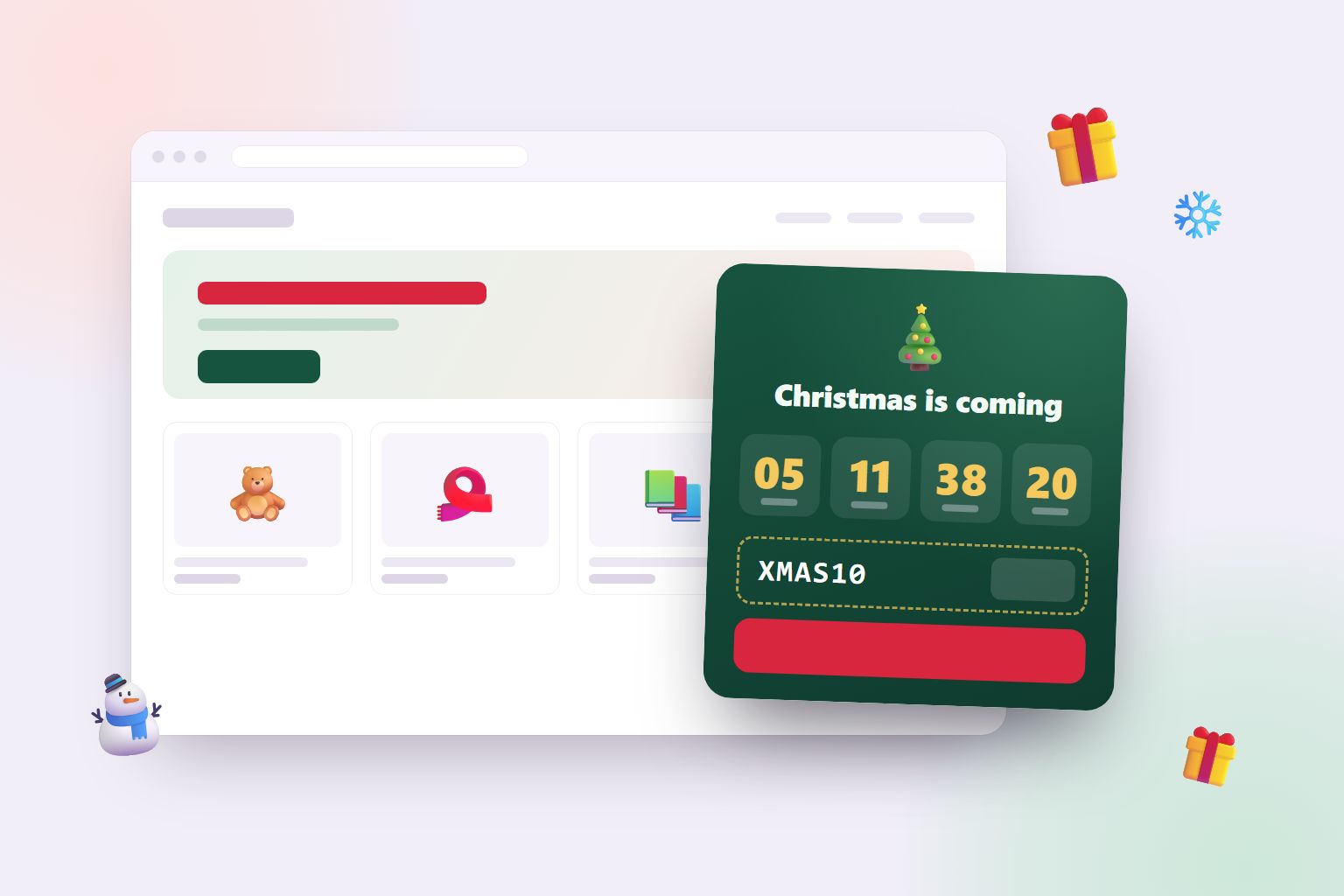
For your webshop: a countdown to a real event: the start of your sale, the end of it, or your last order day before Christmas. Never use a fake timer that restarts, because customers notice and stop trusting you. Read more in Black Friday countdown timers and Christmas shipping deadlines.
8. Crack the code (Mastermind)
What it is: the board game Mastermind asks you to guess a secret code. After every guess, you learn which pegs are right, which are in the wrong place, and which aren't in the code at all.
Why it works: each guess gives you new information, so you feel yourself getting closer. Cracking it feels like your own achievement, not luck.
For your webshop: a skill game is the best way to hand out a discount code, because the code goes to people who made an effort, not to everyone who closes a pop-up. Code Breaker is a Mastermind-style game with digits, so it works for every visitor whatever language they speak, and you can give winners a code. It's also one of our favourite spin wheel alternatives.
9. Challenges and badges (Nike Run Club)
What it is: Nike Run Club offers challenges, like running a set distance in a month, and awards achievements for milestones.
Why it works: a challenge gives a clear goal and a time frame. A badge makes the achievement visible to you and others.
For your webshop: challenges work well around a product range: "Try all five flavours" or "Complete your outfit". Badges fit reviews nicely, like a "Top reviewer" label for customers who review often. Keep the rewards small. The badge is most of the point.
10. Small surprises (Google Doodles)
What it is: Google sometimes turns its logo into a playable game for a special day. Nobody asked for it, and that's why people remember it.
Why it works: an unexpected, harmless bit of fun makes a brand feel human. It costs the visitor nothing and gives them a smile.
For your webshop: not every game needs a reward. Emoji Rain lets visitors tap an emoji and watch it rain down the page. It's silly, it's fast, and your dashboard shows which emojis your visitors click most, a fun way to see what they like.
How to choose the right kind of gamification
You don't need all ten. Start with the goal you care about most:
| Your goal | Best examples |
|---|---|
| More returning visitors | Daily puzzle, streaks |
| Bigger orders | Progress bars, collect the set |
| More repeat customers | Points, tiers, challenges |
| Fewer, better discount codes | Crack the code, daily puzzle |
| More sales in a campaign | Countdowns and limited deals |
| A friendlier brand | Small surprises |
4 mistakes to avoid
- Rewarding everyone. If every visitor wins, the reward is just a discount with extra steps. Let people earn it. We explain why in Earned discount codes.
- Making it hard to understand. If a game needs instructions longer than one sentence, most visitors will skip it. The best examples above can be understood in seconds.
- Getting in the way of shopping. A game should sit in a corner until someone wants it, not cover the products. Make sure it works well on mobile.
- Faking it. Timers that restart, "only 2 left" that's never true, and wheels where every slice wins. Customers have seen them all, and they cost you trust.
How to measure if it works
Pick one or two numbers before you start, and compare 30 days before and after:
- Returning visitors for daily games and streaks.
- Average order value for progress bars and sets.
- Repeat purchase rate for points, tiers and challenges.
- Codes used and revenue per code for games with a reward.
With MojiTiles and Code Breaker, your dashboard shows every step: how many open the game, start playing, win, see the code and copy it. Wondering whether longer visits also help your search rankings? We looked into it in Website games and SEO.
Questions about gamification in ecommerce
What is gamification in ecommerce?
Using game elements, like points, progress, challenges and small games, in a webshop to make shopping more engaging. The goal is to give customers a reason to come back, buy a bit more, or stay loyal.
Does gamification work for small webshops?
Yes. Small shops often benefit most, because a game or a progress bar makes the shop memorable without a big marketing budget. Many of the examples above take minutes to set up.
Do I need a developer to add a game to my webshop?
No. Most game widgets are added with one line of code. Our guide on how to add a game to your website walks through Shopify, WooCommerce, Wix and more.
Try it on your own shop
The quickest way to start is a daily game with a reward for winners. Create a free account, add your brand colour, and put MojiTiles or Code Breaker on your webshop in a few minutes. 🎮