Website games and SEO: why longer visits matter
Can a game on your website help your SEO? Here's what longer visits really do for your rankings, what Google actually looks at, and how to add a game the right way.
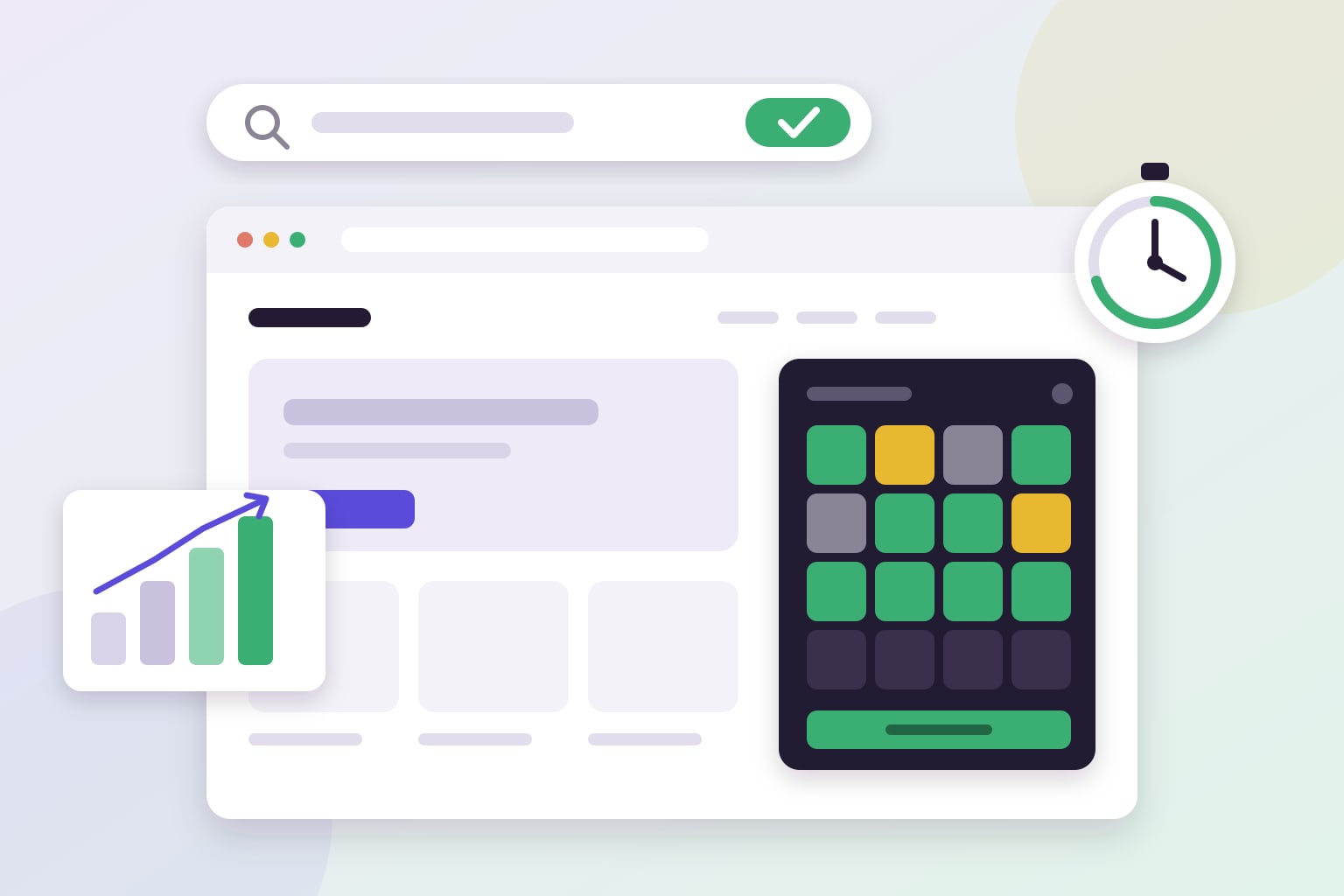
You have probably heard that "time on site" helps your Google ranking. The truth is a little more interesting. Google doesn't reward a stopwatch, but it does pay close attention to whether people find what they were looking for. A small game on your website can help with exactly that, as long as you add it the right way. Here is what longer visits really do for your SEO, and how a game can earn them.
Does time on site affect your ranking?
Not directly. Google has said many times that it doesn't use numbers from Google Analytics, such as average session duration or bounce rate, to rank pages. So adding a game will not move you up the results just because the clock ticks for longer.
But Google does learn from how people interact with search results. Testimony from Google's own engineers has confirmed that click data helps it judge which results satisfy searchers. The pattern it wants to avoid is easy to picture: someone clicks your result, leaves after five seconds, and clicks the next result instead. That is a sign your page didn't answer the question. A visitor who stays, explores and doesn't return to the search results sends the opposite signal.
In other words, longer visits are not the goal in themselves. They are a symptom of a page that people like. And that is what Google is trying to rank.
How games make visits longer
A game gives visitors something to do besides reading and scrolling. Even a short puzzle asks for a minute or two of focused attention, and that changes the visit in a few ways:
- Fewer quick exits. A visitor who is unsure whether to stay now has a reason to. Once they have started a game, most want to finish it.
- More pages seen. People who stay longer tend to look around. They read another article, check another page or see what else you offer.
- A better memory of your website. A small, fun moment makes your site stand out from the ten others they visited today.
Five ways a game supports your SEO
1. It helps people stay instead of going back to Google
When visitors stay on your page instead of returning to the search results, it suggests your page was a good result for that search. A game won't fix a page with poor content, but on a good page it can turn a hesitant visitor into an engaged one.
2. Daily games bring people back
A daily puzzle creates a habit. People come back to play today's game, and many of them will search for your name to find it. Searches for your brand, and visitors who arrive directly, are a strong sign that your website is something people value.
3. People share and link to things they enjoy
Links from other websites are still one of the most important parts of SEO. Nobody links to an ordinary contact page, but people do share a puzzle they liked, a high score or a discount code they won. Every mention is a chance for a new link and new visitors.
4. Engaged visitors take the next step
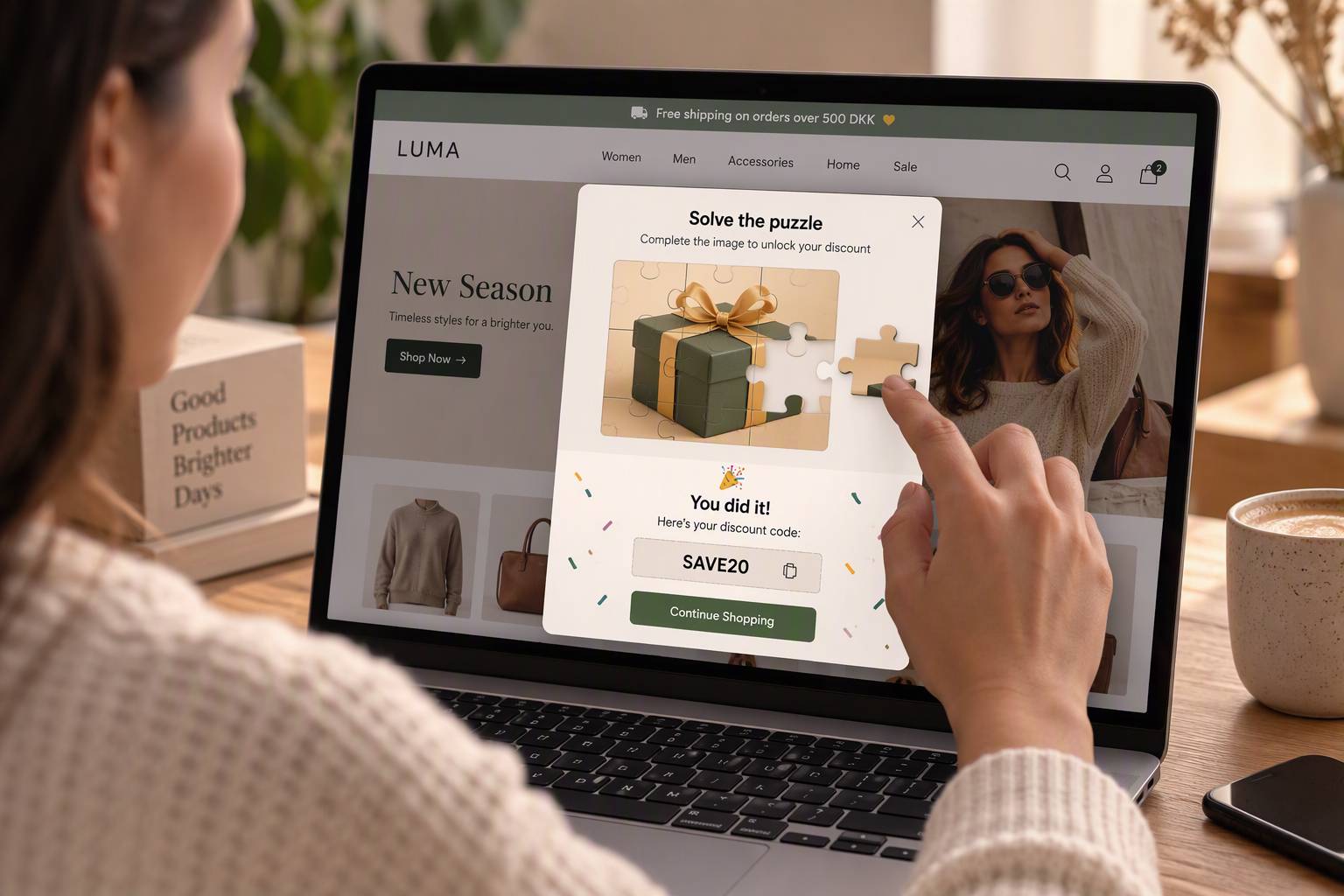
Time on your site gives people the chance to sign up, get in touch or buy. A game with a reward, such as a discount code, gives them a reason to do it now. Better results from the same traffic make every visitor from search worth more.
5. You learn what your visitors like
A game tells you how many people play, how many win and how many use the reward. That shows which pages engage visitors and which don't, so you can improve the content that brings people in from search.
How to add a game without hurting your SEO
A game can also work against you if it is added carelessly. Keep these rules in mind:
- Keep your website fast. Speed is part of Google's page experience signals. Choose a widget with a small script that loads after your page, so it never delays your content.
- Don't cover your content. Google warns against pop-ups that block the page, especially on mobile. Let visitors open the game from a small button when they want to, instead of forcing it on them.
- Avoid jumping layouts. A widget that suddenly pushes your content down is annoying and counts against you. Look for one that sits in its own corner or reserves its space.
- Make it fit your website. Use your own colours and font, so the game feels like part of your site, not an advert.
- Keep it short. A minute or two is enough. The game should add to the visit, not replace the reason people came.
The bottom line
A game won't trick Google into ranking you higher. What it can do is make visitors stay, explore, come back and talk about your website. Those are the things Google is trying to measure, and they are good for your business whether you rank first or fifth.
Want to know more? Read 6 benefits of gamification and 7 benefits of website widgets.
Try a game on your own website
With mojitiles you can add a daily word game, a code breaker, an emoji puzzle and more to any website with one line of code. The script is small, loads after your page, and the game opens from a button in the corner, so it never gets in the way of your content. Pick a game, add your brand colour, and see how your visitors respond in your dashboard.
Create your free account and have your first game live in a few minutes.